Fannie Lou Hamer Leadership Program
The Fannie Lou Hamer Leadership Program is designed for Black disabled advocates aged 18 – 59 who are dedicated to advancing social, political, and economic equity at the intersection of the Black and disability communities. Fannie Lou Hamer often worked with young leaders and began her own human rights work at age 44, which is why the program welcomes both emerging and experienced advocates.
Who is Fannie Lou Hamer?
Fannie Lou Hamer was Black woman, civil rights leader, humanitarian, and grassroots organizer committed to nonviolent action for lasting change. Her work centered to expand equal opportunity, defend civil rights, and uphold fundamental liberties by advancing broader participation in American civic and public life for underrepresented and underserved groups, particularly across the state of Mississippi. After surviving polio as a child and navigating life with a physical disability, she committed herself to improving the lives of others by addressing hardship, instability, and injustice. She led efforts to elevate accessible voting, support equitable pay and workforce development, and reduce hunger and poverty. Her work was grounded in the core belief that human rights and well-being depend on access to economic security, meaningful employment, food security, affordable housing, fair treatment in healthcare, family-centered support services, and safeguards from harmful financial practices. Through the Freedom Farm Cooperative, Hamer provided individuals and families with direct services, education, self-help, mutual aid, and advocacy opportunities, helping build long-term stability and pathways to independent living. She also emphasized community leadership as essential to building strong and inclusive communities. In her honor, AAPD hosts the Fannie Lou Hamer Leadership Program to carry forward her vision of access, opportunity, and community-driven progress.
The 2025-2026 Cohort Overview
This cohort supports Black disabled advocates and emerging leaders who are working to advance one or more of the major principles that Fannie Lou Hamer championed. The program focuses on developing leadership, advocacy, and community engagement skills while helping participants create projects that bring about meaningful change in their communities.
The Fannie Lou Hamer Leadership Program is guided by the core tenets Hamer championed. These include economic stability through equal employment opportunities and financial independence; food security and the ability to meet nutritious dietary needs; affordable housing and inclusive living as foundations for long-term stability; fair treatment in healthcare; and consumer protection to prevent exploitation and promote economic fairness. The Fannie Lou Hamer Leadership Program continues her legacy by equipping Black disabled leaders with the tools, confidence, and community needed to turn advocacy into action.
About Fannie Lou Hamer Program History
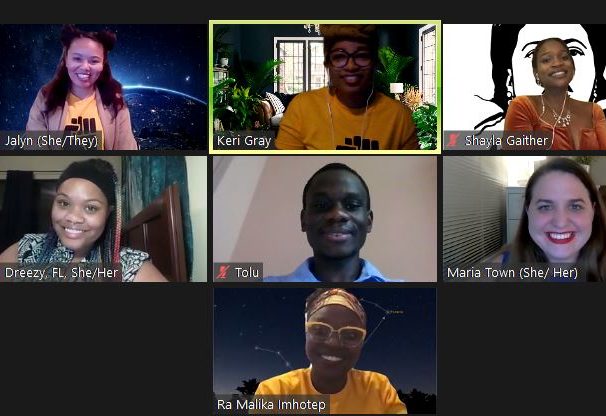
The Fannie Lou Hamer Leadership Program was originally created by Keri Gray with a focus on voting rights and civic engagement. Since its founding, the program has expanded to address a wider range of issues impacting the Black and disability communities, including education, economic opportunity, and community development.
The program’s namesake, Fannie Lou Hamer, was a powerful civil rights leader who dedicated her life to advancing equality and opportunity for Black Americans and people with disabilities. Her work highlighted the profound connections between poverty, education, and access, laying the groundwork for the inclusion of disability rights within the broader civil rights movement. Hamer’s legacy continues to inspire new generations of leaders committed to creating equitable educational and economic opportunities for all.
About the Program
What is the Fannie Lou Hamer Leadership Program?
The Fannie Lou Hamer Leadership Program is a 16-week hybrid leadership and advocacy fellowship designed to cultivate Black disabled leaders ages 18-59. It equips and supports 5 Black disabled advocates who want to grow as community organizers and leaders.Through a combination of virtual sessions, mentorship, and one in-person retreat, fellows will develop the tools and confidence to create measurable change within their own local contexts.
How much time does the FLH Program require?
The program includes weekly virtual leadership development and community outreach sessions along with group discussions, independent study, and community-based activities. It is tailored and designed for emerging and established organizers, leaders, and advocates, offering content that ranges from intermediate to expert levels. Participants should expect to spend about 5-10 hours per week on program-related work. Each participant will receive a $1,500 stipend for their participation, $500 technology stipend, as well as up to $3,000 in funding to plan and execute the required capstone in-person community event.
When is the FLH Program?
The 2023 program will run from October 10 – December 19. The program coordinator will work with participants to choose the times for weekly meetings and other activities.

Meet the 2023 Cohort
Amie Jean
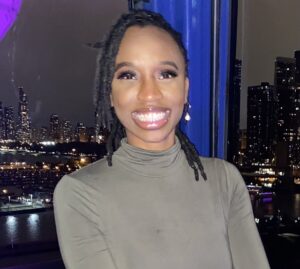 I’m Amie. The A stands for advocate , the M for motivational, the I for impactful in the E for encouraging. In all that I am involved in I strive to embody those descriptors. I’m trying to eat a Fully plant-based diet but I just love strawberry ice cream . I am a first generation college graduate, I am a wheelchair tennis player, a cyclist and more. My focus in this life is to support and empower individuals living credibly through challenging circumstances.
Ollie Henry
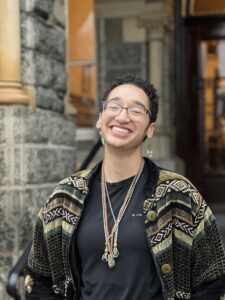 Ollie Henry (they/them) is a yoga instructor, community organizer, budding poet, and public speaker studying Government and Women and Gender Studies at Georgetown University. Their practice of holding space on the yoga mat centers healing and embodiment for folkx of the Black Diaspora and has led them to present workshops at the Healing While Black Summit and teach classes in D.C. Furthermore, Henry has done extensive community organizing work around reparations, leading Hoyas Advocating for Slavery Accountability and the GU Protects Racists campaigns at Georgetown University. They have spoken extensively in the public sphere about the intersection of queerness, blackness, and (dis)ability, from being the first non-binary person to speak at the March on Washington to their 2022 TEDX talk.
Saphire Murphy
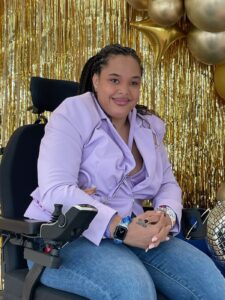 Saphire Murphy ( she/ her) is a graduate student applying for her doctorate this fall. She is currently involved in her local community ( Cleveland, Ohio ) advocacy work and hopes to continue it after her studies. Representation is a key to Saphire’s work, professionally and personally, and she wants people in her local community to understand the power in holding intersectional identities in her local community.
Qualik Ford
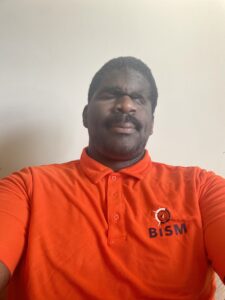 I’m Qualik Ford, a 22-year-old from Maryland. I use he him pronouns. I am blind and partially deaf, I find joy in listening to books, engaging in debates, and playing goal ball.
Kaysia Corbett
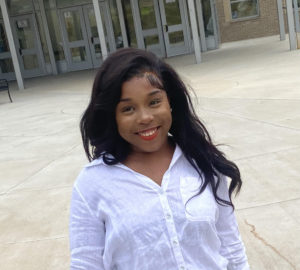 Hello, My name is Kaysia Corbett. I am originally from Hamden, CT but I moved to Baltimore to pursue my degree as a nursing student at Morgan State University. In 2019, I suffered through a near-fatal car accident which resulted in a TBI, a subdural hematoma, or bleeding on the outermost part of the skull. I have always been in admiration of my ability to alchemize knowledge in attempts to connect with and understand the world around me. After my car accident, it became a lot harder to understand and remember pretty much everything. Through this experience, I was able to gain a larger sense of compassion and empathy for those with intellectual disabilities, as well as for myself. I finally realized that perfection does not exist, only the idea of it does and to not be so hard on myself over things that were written into existence since this world was created. Through my passions for both health care and community, I aspire to help others heal through social action development and community empowerment. I pray that through this wonderful experience, I can gain the wisdom and knowledge that this life requires to help others and make a real difference in the community for those with disabilities.
Learn More About the FLH Program
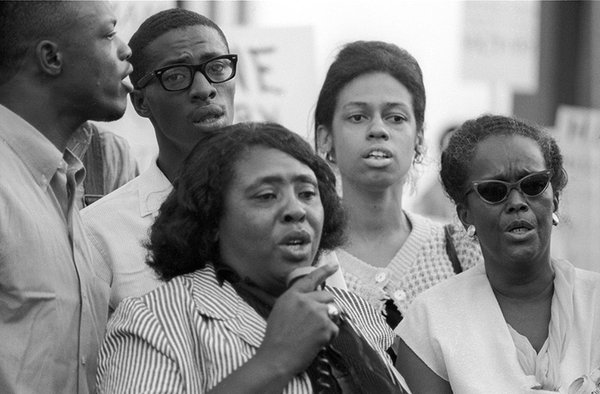
2022 Fannie Lou Hamer Leadership Program