
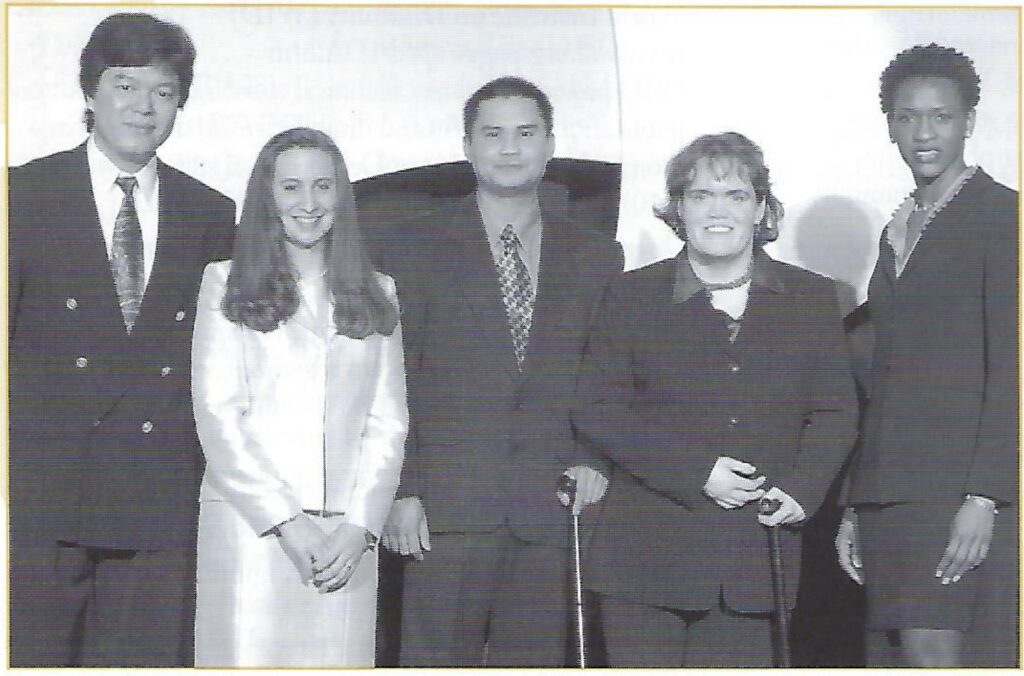
- A black-and-white photo of the 2002 Paul G. Hearne Award recipients: (from left to right) Albert Cheong, Sarah Louise Triano, Peter Cody Hunt, Carrie Griffin and Claudia Gordon.
When Sarah Triano received a Paul G. Hearne Emerging Leader Award from AAPD in 2002, she used her award funds to start what is commonly referred to as the country’s first Disability Pride Parade, which took place in Chicago on July 18, 2004. The parade has continued to this day, growing to be a mainstay in Disability Pride Month programming.
The Hearne Award was instrumental both in the development of Chicago’s Disability Pride Parade and also in Triano’s personal and professional development.
“The Hearne AAPD Leadership Award gave me the support that I needed during a time when I was young. I really didn’t know a lot of people in the movement as much and it really helped to solidify that the direction I was going down and the path that I was pursuing was valid, was relevant, was important,” Triano said. “It recognizes that as a young leader with a disability, I had something to contribute.”
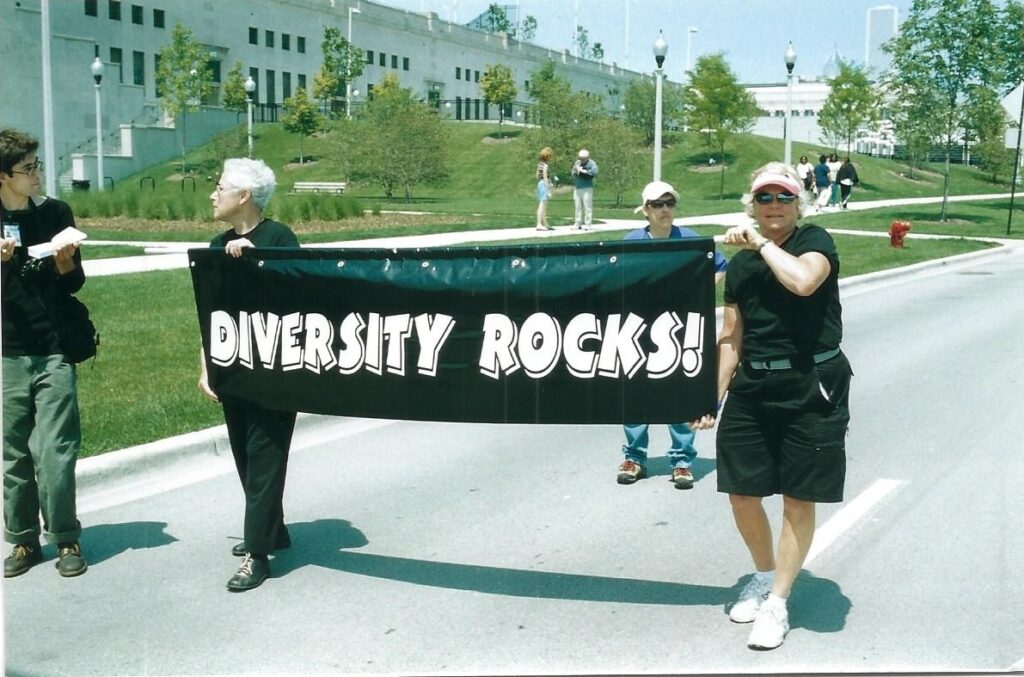
Two older people at a protest. They’re holding a banner on either side. The banner has a black background with large, white, stylized font that says “diversity rocks!” in all capital letters.
Triano was working for Access Living of Metropolitan Chicago when she decided to apply for the Hearne Award. As part of her job, she would visit schools to recruit students with disabilities for a leadership development program for youth with disabilities. By talking to these young adults, she realized that there was a need for community building among disabled people.
“We realized the sense of just internalized shame about having a disability was so strong that even though these students were in a special education classroom, they wouldn’t even admit that they had a disability. And so we were like, we’ve got to do something to just flip the script and to show them that they are part of an amazing community that has a rich, wonderful history and that their disabilities are not liabilities, but disabilities are not something to be hidden,” she said.
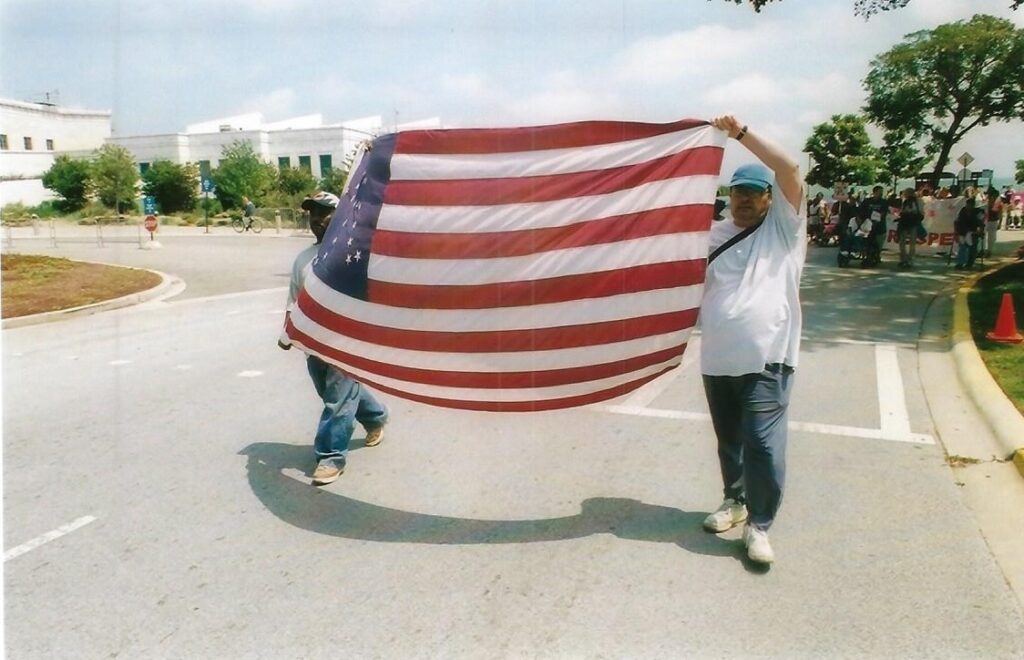
Two people holding up a large American flag with the international symbol of access made out of the stars in the flag. The wind is blowing from behind the flag, making it jut out from the front.
When Triano attended the National Leadership Forum for Students with Disabilities, she met leading disability activists like Justin Dart, Andy Imparato, and Judy Heumann, who specifically encouraged Triano to apply for the Hearne Award and mentored her throughout the application process and beyond. The award directly funded the parade.
The first year of the parade, Triano said she and the other organizers had difficulty convincing the city to allow them to march along the route from Shedd Aquarium to Soldier Field. Now, Chicago has an honorary street sign labeled Disability Pride Parade Way at the intersection of South Plymouth Court and West Van Buren Street.
Approximately 1500 people attended the first parade in 2004. Triano envisioned the parade as a celebration, more than a protest.
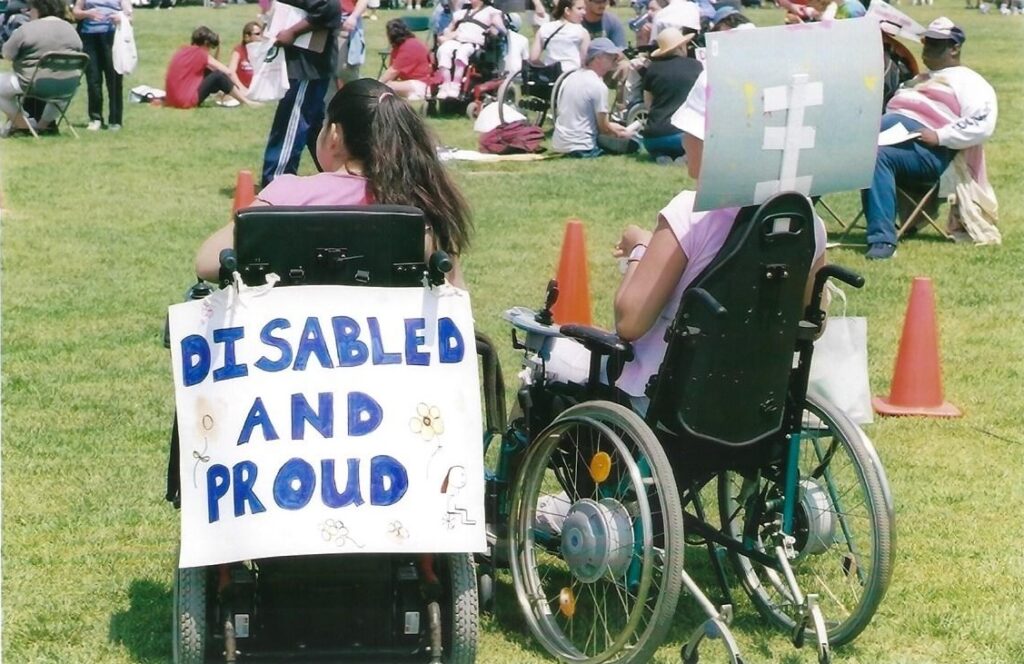
Two wheelchair users at a protest with their backs turned to the camera sitting on the grass. One of them has a sign visible on the back of their chair. The sign says “disabled and proud” in large, blue, all capital letters with flowers on either side. There are other people with various disabilities visible in the background.
“This was more about, not what are we against, but what are we for. This was sending a message about about what do we want for our community. We wanted a day to just celebrate and to not have to fight,” she said.
She also wanted to make sure all disabled people who wanted to participate in the parade were included.
“I remember that first year, we had a real intense debate about who should be involved in the parade. And there were some folks who were like, we shouldn’t be inviting people in institutional settings to come and I was like, but this is the only place they’re going to hear about disability pride and be exposed to it and hear that disability is a natural and beautiful part of human diversity that they can be proud of. They don’t have to be ashamed of it. And so we were like, okay, everybody’s invited.”
As someone with non-apparent disabilities including an immune system disorder and a mental health condition, it took her time to come to terms with her disability. Triano had to drop out of her PhD in disability studies because she was denied health insurance on the basis of a pre-existing condition. Doctors and therapists have discouraged her from seeking employment opportunities because of her mental health.
“For the rest of my career, I have dedicated my life to making sure that no other person with a disability has to experience the same discrimination in health care that I have,” she said.
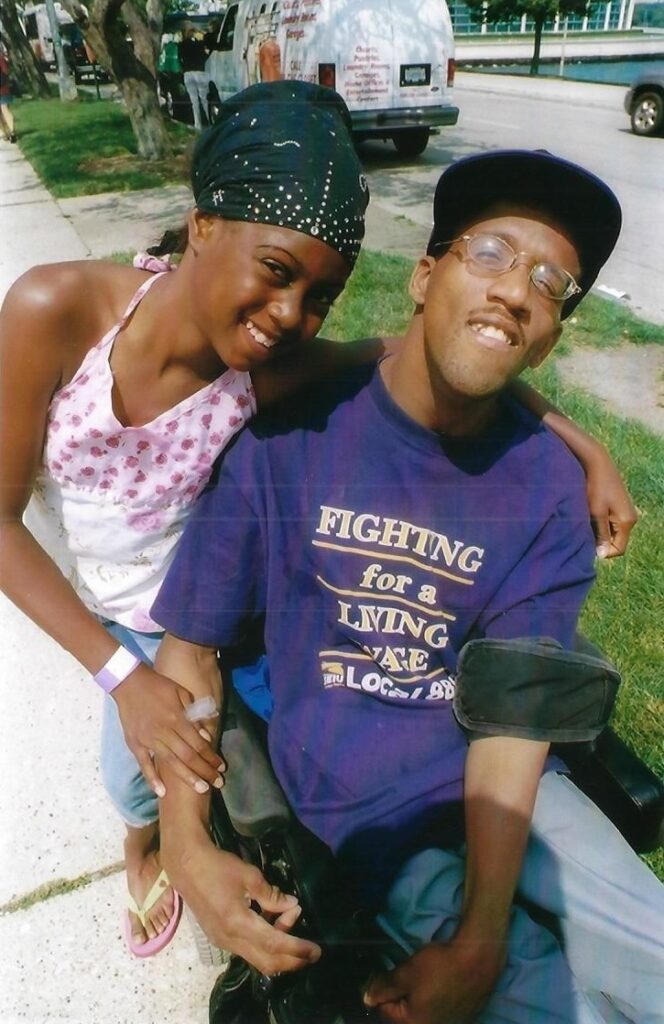
Two Black people smiling at the camera. One is a wheelchair user, the other is a woman leaning against him. The wheelchair user is wearing a shirt that says “fighting for a living wage”.
While working at Centene Corporation, she used her connections with the National Council on Independent Living to form the Provider Accessibility Initiative. Teams of staff from centers for independent living conduct site accessibility surveys of doctors offices in their network and develop a plan to address disability access barriers they identify. Centene has provided over $2 million in grants to doctors offices to improve their accessibility. Triano now works as the Associate Director of Longterm Services and Supports and Disability Policy at the Center for Health Care Strategies.
When asked what advice she has for the next generation of disability activists, Triano encouraged the disability community to learn how to be self-reliant during this time full of cuts to government programs that support disabled people.
“I think this is a critical moment in time for us, and the fights that we’re doing are so important,” she said. “We absolutely have to have a portion of our community out there on the front lines like ADAPT, like AAPD, fighting the cuts, fighting these things, but we also absolutely need to come together as a community and say, how can we support ourselves without being reliant on these other systems?”
Even in the midst of cuts and harmful policies, Triano hopes that activists will still lead with love.
“The final thing I’ve learned over the course of my career is good things can be fueled by anger. Necessary things happen when you get angry, but there also needs to be space for love. You need to have a space for that love, advocacy from a place of love and seeing the humanity in your perceived opponents, seeing the possibility for change within everybody.”