
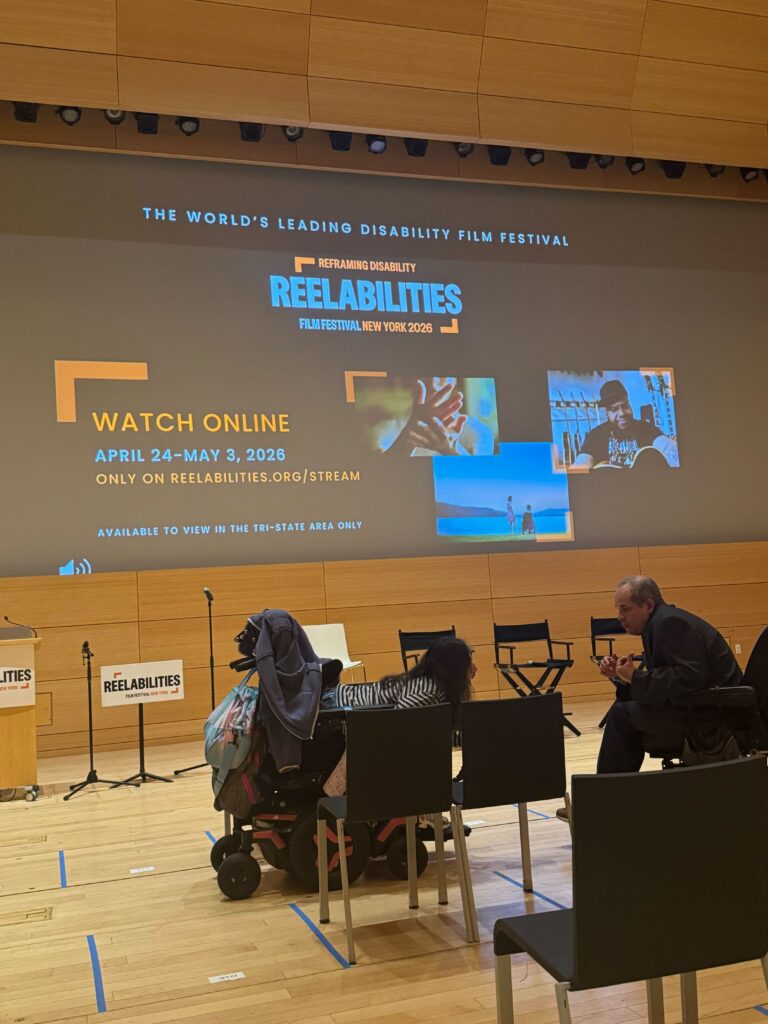
Two wheelchair users speak, in front of a projected ReelAbilities sign.
This past week, I attended ReelAbilities Film Festival in New York. ReelAbilities is a festival dedicated to improving media representation of disability and using storytelling to advocate for accessibility and inclusion. It was an incredible celebration of the importance of disabled stories and the talent of the many creatives with disabilities striving to improve the narrative surrounding disability.
AAPD cosponsored a collection of short films at ReelAbilities called ReelShorts: Against the Current. This collection of shorts highlighted the strength and solidarity of disability advocates around the world who are fighting to improve systems and policies, just like what we do at AAPD. I especially loved White Nine, which focused on the group of disability advocates who founded Boston and Amherst’s centers for independent living. As someone living in Boston, I enjoyed learning about disability advocates in my own city, especially people who made a big impact but do not always get as much recognition since their advocacy was more localized. I also liked Rag Dolls, the true story of two married women in Mexico who both use wheelchairs. This short documentary depicted the beauty of disabled love and interdependence. Hopefully this cosponsorship is just the start of AAPD’s involvement at ReelAbilities going forward!
I saw a variety of other movies throughout my time at ReelAbilities. One of my favorite movies was called Horsegirls. This movie portrayed a beautiful fictional story about an autistic young woman named Margarita as she explores her identity and her passions while also gaining independent living skills in preparation for life without her mother, who has cancer. Lillian Carter, who starred as Margarita, shared insights about the movie and her role in a panel after the screening. She described the importance of accessibility coordinators to help make productions more inclusive. She also talked about how a diverse range of disability experiences need to be portrayed in the media. Disabled actors like Lillian not only bring their lived experiences to their roles in a way that adds authenticity, but are also essential in advocating for more accessible productions.
I also really enjoyed Concerto for Other Hands, a documentary about David González Ladrón de Guevara, a Mexican pianist with Miller syndrome. Although his disabilities affected his dexterity and hearing, he followed his greatest passion, music, and premiered a concerto his father wrote for him. The documentary did a great job showing the power of music and how disabled people can leverage their disabilities to create beautiful art. There was an audible gasp in the room when the movie ended with a dedication in memory of David. At least his beautiful music will live on.
In addition to movies, the festival also included an Industry Summit focused on disability inclusion in film and performing arts. I had the opportunity to attend a few incredible panels. As a huge theater fan, it was great to hear from panelists from theater companies that center disability: Out of the Box Theatrics, ArKtype + Under the Radar, and Deaf West. While theater and other forms of entertainment have a long way to go before being fully accessible, companies such as these are showing how platforming disabled actors and highlighting the stories of people with disabilities can make a true difference. Theater was represented elsewhere at the festival as well; Tony Award-winning actress Ali Stroker received the ReelAbilities Spotlight Award for her impact in the entertainment industry.
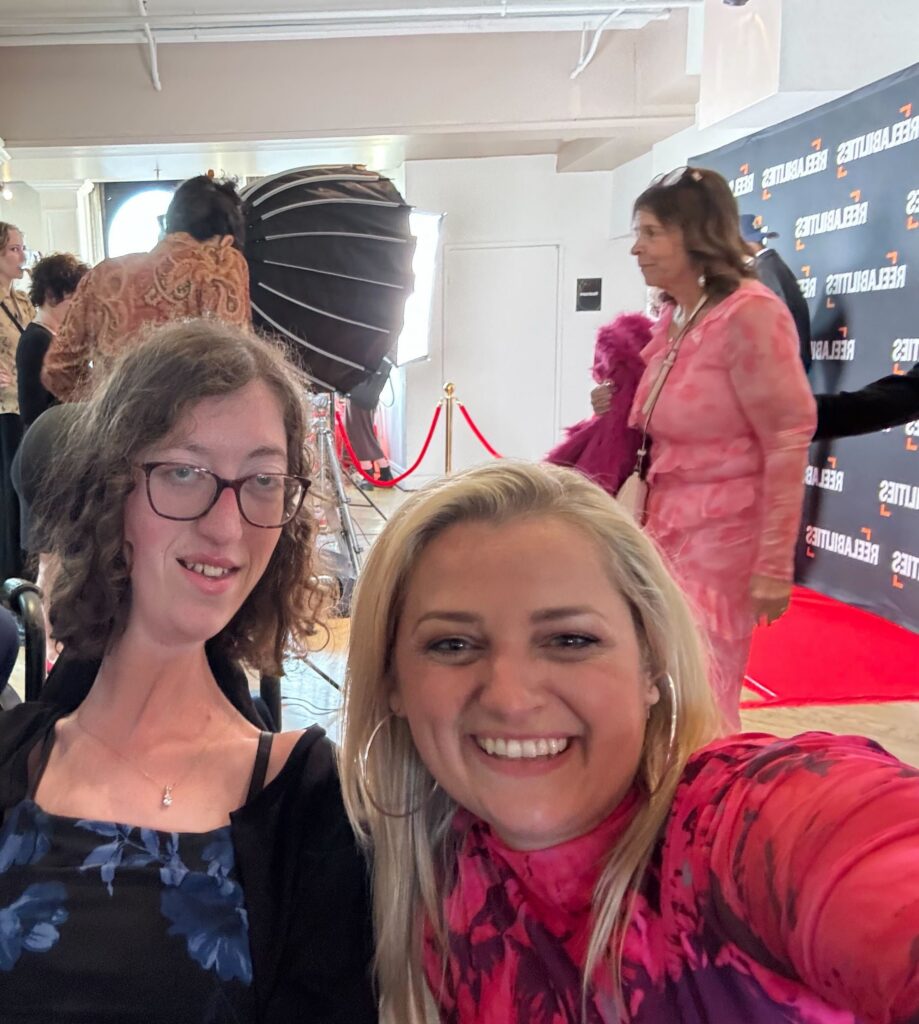
Naomi Hess poses with Ali Stroker. Naomi is a white woman wearing glasses and curly brown hair smiling at the camera. Next to her is Ali Stroker, also a white woman, wearing a pink top, also smiling at the camera
Another great panel discussed the current state of disability representation in the media. It featured Emily Ladau, Disability Inclusion Strategist for Easterseals Southern California, an AAPD Summer Internship Program Alum and Paul G. Hearne Emerging Leaders Award winner, alongside representatives from Nielsen, FWD-Doc, and Center for an Urban Future. The panel was moderated by Lawrence Carter-Long, the Director of Engagement at ReelAbilities and also a Hearne Award winner. Emily described findings from a recent report she worked on. In her words, “inclusion needs to be a movement, and not a moment.” Emily also talked about how accessibility should not just be a line-item on a budget, but should instead inform the whole production. Cassidy Dimon, Executive Director of FWD-Doc, described how authentic representation behind the camera helps get authentic representation in front of the camera as well. This panel demonstrated how much media representation of disability truly matters.
Attending ReelAbilities was such a special experience for me because it is rare to be surrounded by so many disabled creatives. The entertainment professionals in attendance are changing the narrative about disability through advancing accessibility and inclusion in their content. Cultural change and policy change go hand-in-hand; accurate media representation of disability helps show the public the challenges and triumphs of the disability experience, and what needs to change to ensure true access. I’m so grateful I got to attend this incredible festival and it only reinvigorated my passion for telling and seeking out disability-centered stories!