
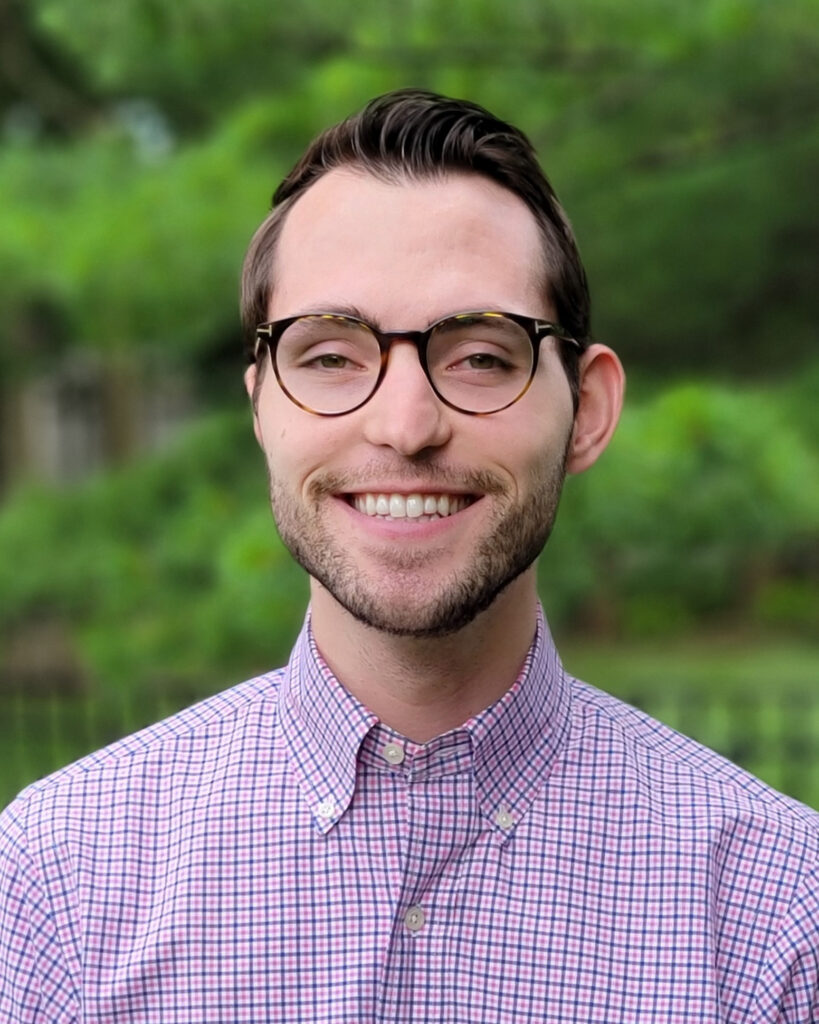
Photo of Jack Reeves, a man in a business-casual button-down smiling at the camera in front of trees
LGBTQI+ Pride Month just ended, Disability Pride Month has just begun, and we are celebrating 250 years of American democracy. The gays are queuing up the pop divas, lesbians are lighting the fireworks, and Americans across the country are firing up the grills to celebrate the republic — if we can keep it. But, as a queer disabled American, I find myself contemplating the season’s political forces with equal parts solemnity and cautious optimism.
The anniversary of the June 1969 Stonewall Uprising is a fitting time for LGBTQI+ people to celebrate who we are. So too is the anniversary of the July 1990 signing of the Americans with Disabilities Act a time to recommit to the equal opportunity, economic power, independent living, and political participation that disabled people deserve. It is a time to honor the fight for civil rights and bodily autonomy — fundamental to both the LGBTQI+ and disability movements — and to take up civic space, gathering with others at home or in community. In these months, the full force of the rainbow roars through the United States with the resolve that what makes us different is grounds for pride but also that we, ultimately, are born just as free and equal in dignity and rights as everyone else.
While legal and medical precedents have led to divisions between the disability and LGBTQI+ communities, the social, cultural, and political experiences of both communities — and the identities themselves — are deeply intertwined. Indeed, LGBTQI+ people are more likely than non-LGBTQI+ people to be disabled, and disabled people are more likely than nondisabled people to be LGBTQI+. Both communities face stigma from public service providers and discrimination in education, employment, and housing. They are targets of harassment and hate crimes and face medical guardianship challenges at disproportionately high rates.
However, both communities have also linked arms for decades to fight the assumption that they should be ashamed or hidden, harnessing pride to “shed internalized oppression,” in the words of Amy Hasbrouck, the blind, bisexual organizer of the first-ever disability pride demonstration in Boston. Both communities gather to demonstrate pride in back-to-back months, a fitting exercise of our right to peacefully assemble as our democratic republic turns 250.
But, this Pride season, a constitutional bomb went off for disabled Americans in the form of a memo from the Department of Justice threatening disabled people’s civil rights and community integration. In the memo, the Justice Department argues that there is no legal justification for mandating states to provide services to people with disabilities in the most integrated settings possible, giving the federal government the legal green light to strip disabled people’s access to home- and community-based services, while giving state governments political cover to do the same. In doing so, DOJ turns its back on a tradition of community integration started in 1977 when Section 504’s regulatory framework entered into force, codified in 1990 with the signing of the Americans with Disabilities Act, and upheld by the Supreme Court in Olmstead v. L.C. in 1999.
A threat like this should alarm all Americans but especially LGBTQI+ Americans in light of our shared political experience. After all, our bodily autonomy, civil rights, political participation, and access to the public square are precisely what strengthen our democratic institutions. That is why, to live up to our promise 250 years in the making, we must protect these fundamental rights.
In 2022, while working in the Office of the U.S. Special Envoy to Advance the Human Rights of LGBTQI+ Persons at the U.S. Department of State, the theme guiding our Pride Month strategic engagement and the integration of the human rights of LGBTQI+ people in foreign policy was that LGBTQI+-inclusive democracies are stronger democracies. As Ari Shaw articulates in Foreign Affairs, drawing on decades of evidence, the individual freedoms of LGBTQI+ people and their equal protection under the law indicate healthy levels of “democratic norms and institutional safeguards.” Conversely, Shaw explains that “efforts to undermine rights often arise in tandem with other illiberal aims,” such as meddling in the independent media, cracking down on the freedom of assembly, and other elements of democratic backsliding that lubricate the machinery of authoritarianism. It is therefore in the U.S. national interest to promote individual freedoms and legal protections for LGBTQI+ people globally and for people all over the world to exercise their own democratic muscles for the sake of freedom in general.
Just as LGBTQI+-inclusive democracies are stronger democracies, democracies that are inclusive of disabled people are stronger too. The removal of physical barriers at campaign sites and polling places means more disabled people can participate on the campaign trail and in the voting booth. Access to safe, legal voting by mail allows more disabled people to make their voices heard in the face of mobility challenges or inaccessible transportation. Election offices can reduce communication barriers to voter education and election information by adhering to web content guidelines, offering Braille and/or audio-guided interfaces, using plain language, and furnishing accessible ballot marking devices. Jurisdictions can address attitudinal barriers by integrating disability perspectives in poll worker training and incorporating disabled people’s organizations in international election observation missions. Congress can pass legislation ensuring that disabled people’s campaigns for office do not disqualify them from federal benefits. All of these efforts will ensure that the world’s largest minority group can participate in free and fair democratic processes with pride.
These pro-democracy steps benefit not only LGBTQI+ and disabled people — they benefit everyone. Just as curb cuts, closed captioning, and automatic doors help everyone, refusing to limit early voting periods makes the democratic process more convenient for disabled and nondisabled people alike. Decriminalizing homosexuality around the world makes HIV/AIDS prevention and response efforts more effective for all. Fostering safer, more inclusive workplaces for LGBTQI+ people prevents brain drain in communities where everyone benefits from talented human capital. Including LGBTQI+ and disability perspectives in these efforts leads to better health, stronger economies, and safer societies; ensuring the inclusion of LGBTQI+ and disabled people in the political process will make our democracy more resilient.
The Trump administration’s Olmstead memo is but one action in a pattern or practice of broader policy and posture changes mirroring those of illiberal governments abroad. Asserting direct political control over law enforcement, purging the civil service, encouraging the elimination of presidential term limits, and crying “gender ideology” to whip up outrage and consolidate power are moves that autocrats make. They dismantle infrastructure, create resource scarcity, and make it harder for LGBTQI+ and disabled people to organize and enjoy equal rights. They weaken everyone’s democratic institutions.
As we mark 250 years of the United States, recommitting to disabled and LGBTQI+ Americans’ equal rights will only make our democracy stronger and our union more perfect. The present political moment is precarious. But the resistance is strong. Countries that previously feared the “America First” (read: America Alone) approach are now proceeding without us. When the United States reorients toward a democratic world order that respects and empowers — rather than vilifies and abandons — its most vulnerable citizens, grab the aux and cue the pride playlist, because that will be cause for celebration.
Jack Reeves is an AAPD program alum with past experience in the Office of the U.S. Special Envoy to Advance the Human Rights of LGBTQI+ Persons at the U.S. Department of State, the Office of Majority Leader Steny Hoyer in the U.S. House of Representatives, and the U.S. Peace Corps in the Dominican Republic. Currently, Jack works on public policy initiatives advancing reproductive and adolescent health, global gender equality, and multilateralism. This article represents his own views, not those of organizations with which he is professionally associated.