Today, on the last day of Disability Pride Month, we are looking ahead to the future. We asked five leaders from AAPD’s network and staff to share what disability pride means to them. Enjoy their reflections as we close out a month of celebration and look toward the work ahead.
Vesper Moore
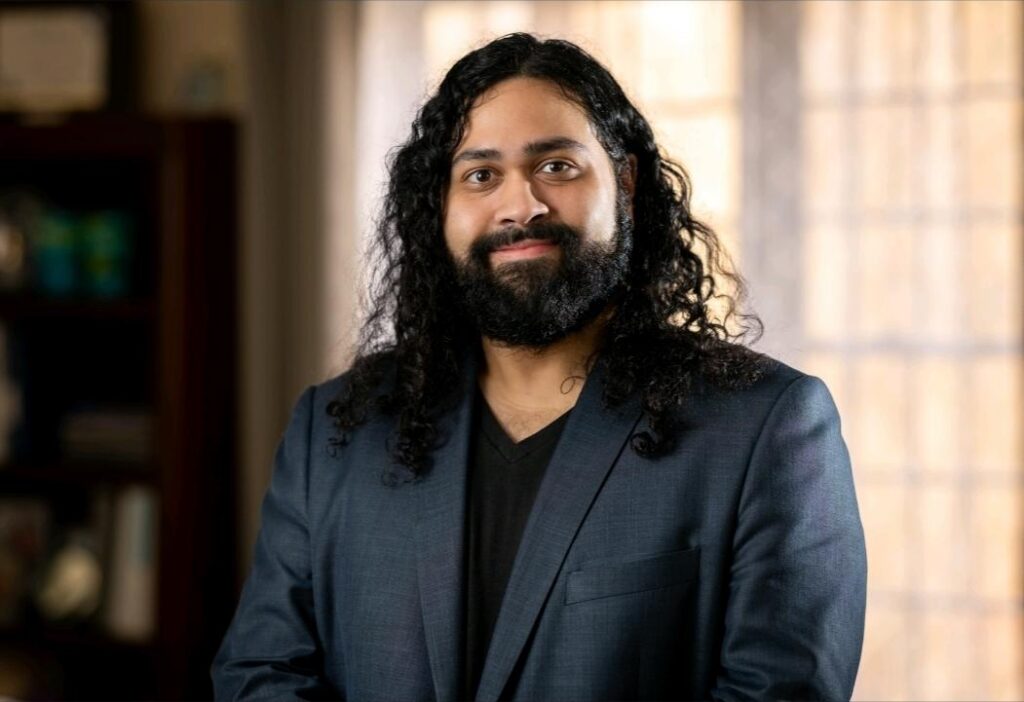
Photo of Vesper Moore
Disability Pride means refusing to shrink myself to make other people comfortable.
As someone with a mental health disability, I’ve spent a lot of time watching society tell disabled people who we should be, where we should live, what risks we’re allowed to take, and how much freedom we’re entitled to. Pride is saying no to all of that. It’s knowing that disability is not something I have to overcome to deserve dignity. It is part of who I am, and it has shaped the way I see justice, community, and humanity.
I’m proud of our movement, but pride isn’t passive. It comes with responsibility. The Americans with Disabilities Act, the Rehabilitation Act, and Olmstead didn’t appear because people suddenly decided to do the right thing. Disabled people fought for them. People put their bodies on the line, challenged institutions, organized, sued, protested, and refused to disappear. Those protections are living promises, and every generation has a responsibility to defend them.
Disability Pride also reminds me that our greatest strength has always been each other. We build community in places where people said community couldn’t exist. We create alternatives when institutions tell us there are none. We imagine a world that values interdependence over exclusion and belonging over control.
To me, Disability Pride is about more than celebrating who we are. It’s about protecting what we’ve built, honoring those who came before us, and making sure the next generation of disabled people inherits more freedom, more choice, and more justice than we did. That’s a future worth fighting for.
Vesper Moore is a disability and mental health advocate and the Chief Operating Officer of Kiva Centers. Their work brings together advocacy, public policy, behavioral health, and research to fight for the civil and human rights of people with disabilities and create real alternatives to institutional care. For Vesper, disability pride is about carrying forward the promise of the ADA while continuing to push for freedom, dignity, and a world where disabled people have the power to shape their own lives.
Olivia Murphy
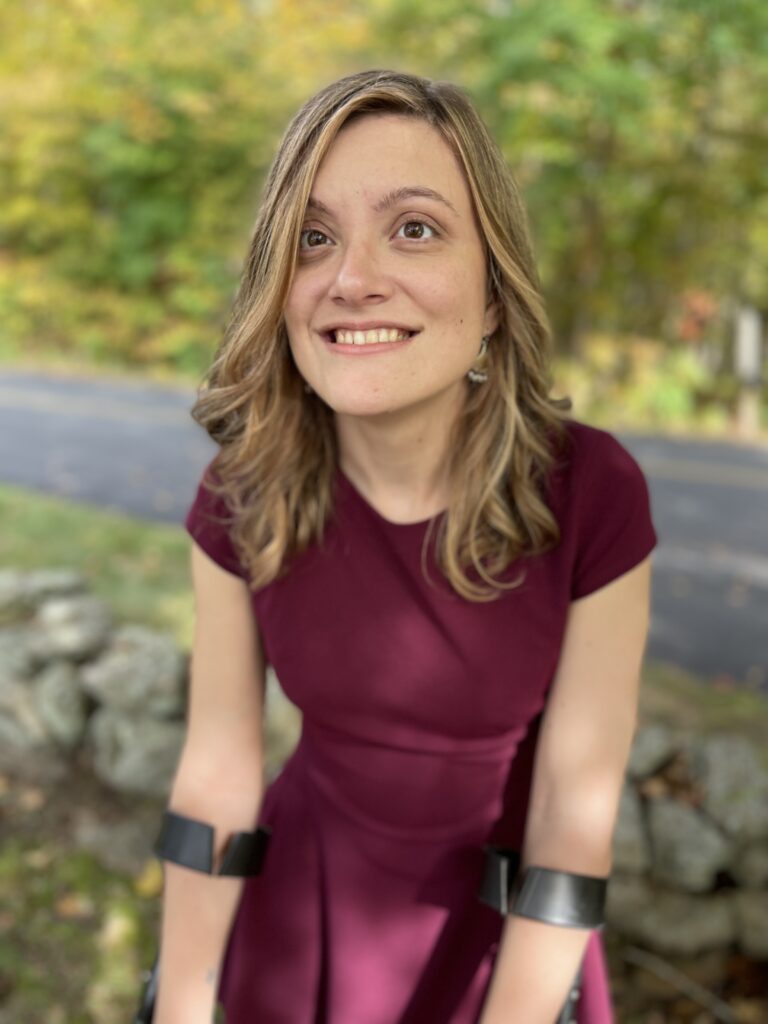
Photo of Olivia Murphy
Disability Pride is more than a month on the calendar. For me, it is a reminder that disability is not something to hide, minimize, or apologize for. It is part of who we are, part of our stories, and part of the strength we bring into the world.
To me, Disability Pride means embracing our disabilities and being proud of who we are. Disability is not a weakness or a measure of our worth. It is one part of a full, complex identity that deserves respect, visibility, and celebration. It also means honoring the advocates who fought for our rights. Their work made access, recognition, and greater inclusion possible. Progress did not happen by accident; it happened because people spoke up, organized, and refused to be left out.
Pride does not mean pretending everything is easy. Disabled people still face barriers, misunderstanding, and systems that are not always built with us in mind. Disability Pride makes space for frustration, grief, anger, hope, joy, and determination. For me, that is part of what makes it meaningful. It is not about forcing positivity. It is about saying our experiences are real, our voices matter, and our lives are valuable exactly as they are.
One thing I wish more people understood is that having the same disability does not mean it affects everyone the same way. Every disabled person has unique experiences, strengths, challenges, and support needs. There is no one-size-fits-all disability experience. Some disabilities are visible, and others are not. Some needs are constant, while others change day to day. Listening and avoiding assumptions can make a real difference.
Disability Pride feels like the disability community coming together to celebrate our identities and imagine something better. It reminds us that accessibility is not extra, and inclusion is not optional. A more accessible future benefits everyone.
When disabled people are respected, included, and supported, more people can belong. That is the future I want to help build: one where disabled people are not just accommodated, but truly valued.
Olivia Murphy is a Florida-based writer, advocate, and host of Living My Best Disabled Life, which she started in 2021. Through her podcast, articles, and digital storytelling, she interviews a range of disability advocates across different fields, exploring topics from disability justice and politics to pop culture. Her work aims to uplift voices within the disabled community, spark meaningful conversations, and highlight stories that are often overlooked. She is also the author of an upcoming children’s book designed to empower disabled kids to see themselves as the heroes of their own stories.
Jess Davidson
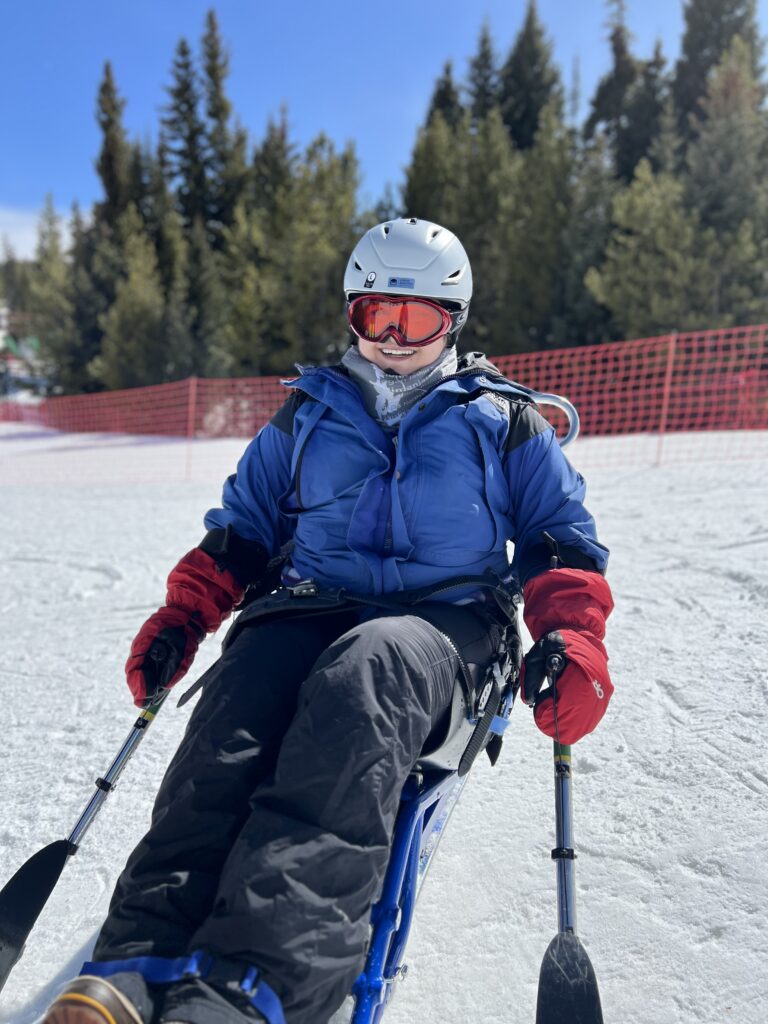
Photo of Jess Davidson
So much of my experience with disability has been outside of my control. There are many aspects of my disabilities that I would not choose if given the chance — severe, unrelenting pain chief among them. To also develop a positive disability identity and experience Disability Pride as a result of those circumstances is both a radical and healing act.
Fostering a sense of Disability Pride connects me deeply to disabled community — more meaningful and committed community than I dreamed possible in my life is everywhere in the disability community. Disability Pride has steadied me during the abrupt and turbulent transition into my disabled body, strengthening my self-advocacy and my self-worth in equal measure. Disability Pride provides this same steadiness to our broader community amidst unprecedented policy attacks on disabled people and a terrifying resurgence of ableism.
Disability Pride also creates space for affirming nuance: I don’t have to sugarcoat the difficult parts of being disabled for my pride to be deep and abiding. Our ability to hold complex truths as a community is reflective of the thoughtfulness I am so lucky to encounter every day in disability-led spaces. I know that the strength of my pride and the acceptance of my community can sit right alongside my pain, my anger, and sometimes, my devastation.
Being a proud member of the disability community is truly one of the greatest joys of my life, as is leading communications at AAPD. I feel so lucky to be part of this community and work.
Jess Davidson (she/her) is Senior Communications Director at AAPD. In addition to her work at AAPD, she serves on the Ad Council’s Advisory Committee on Public Issues. Her writing has been published in the Georgetown Immigration Law Journal, Washington Post, Glamour Magazine, and The Huffington Post, among others. In 2016, President Obama and then-Vice President Biden named her a White House Champion of Change for her advocacy to end campus sexual assault. Outside of work, Jess enjoys cooking, reading, art (making and enjoying), paraskiing, and wheelchair hiking.
AJ Link
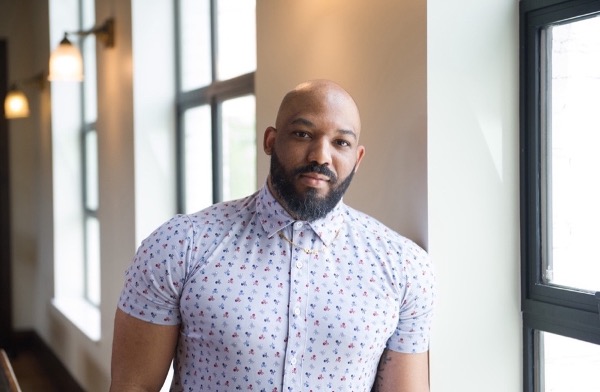
Photo of AJ Link
Disability Pride Month this year comes at a time when our community feels more exhausted than it’s been in a while. The past few years have been extremely hard on our community. We have seen so many of our elders and leaders transition into being our ancestors. We have lost so many of our comrades too soon due to a negligent society and hostile government policies. We are witnessing a resurgence of ableism and the mainstreaming of eugenics at a time when laws like the Americans with Disabilities Act, Section 504 of the Rehabilitation Act, the Individuals with Disabilities Education Act, and other laws designed to protect disabled people are being attacked, defunded, and targeted for dismantling.
And through it all, there is still the same grit and stubborn determination to fight back against every attack on our disabled existence. Disability Pride means refusing to be erased by people who devalue our lives. We continue to demand Disability Justice and liberation for all Disabled folks. Disability Pride Month is a time for us to celebrate our humanity while forcing the rest of the world to acknowledge our existence. We continue to survive in a world that was not designed for us. We continue to create a more accessible future for ourselves. Disability Pride is forever defiant and I think that is something worth celebrating.
AJ Link [he/him] is openly autistic. He is the founding president of the National Disabled Law Students Association and the National Disabled Legal Professionals Association and currently serves as the president of the board of Crip the Law. AJ was previously an accessibility lead for AstroAccess and a policy analyst for the Autistic Self Advocacy Network. He currently works as the director of policy for New Disabled South and New Disabled South Rising.
Kyle Khachadurian
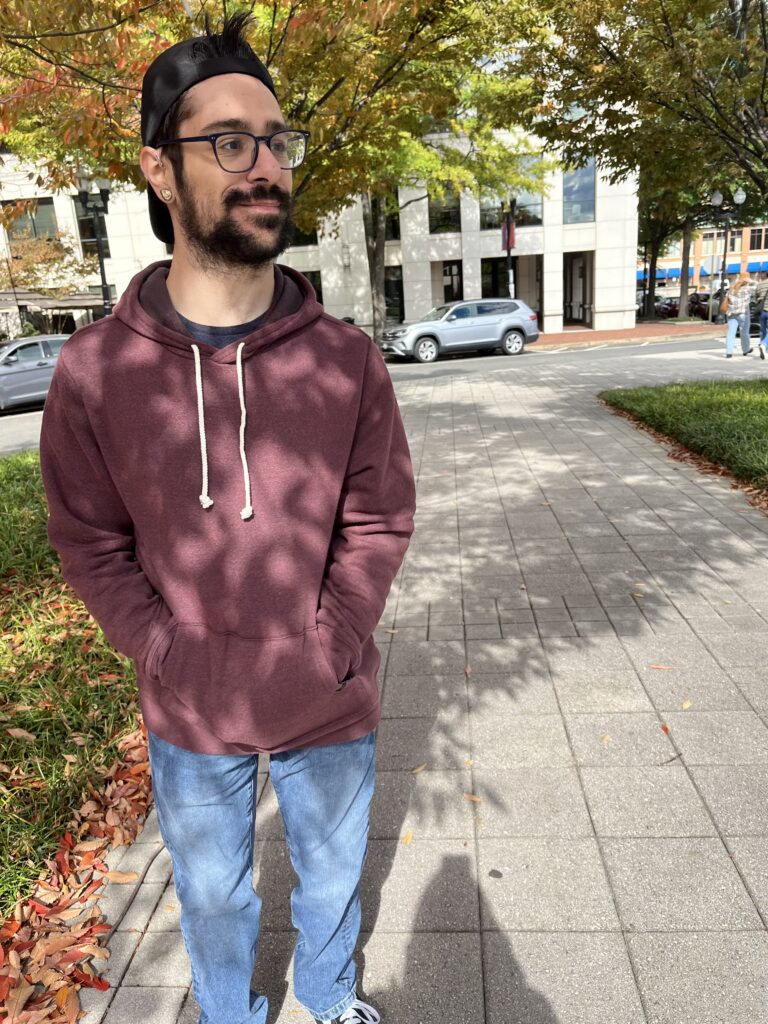
Photo of Kyle Khachadurian
Disability pride did not come easily to me. I was born with mild spastic diplegia, commonly grouped under the umbrella of cerebral palsy, and my disability was just one little piece of me. I grew up going to schools exclusively for kids with disabilities all the way until college. This, too, was just one facet of me. I grew up feeling almost entirely indifferent about my disability, because it was all I knew and all I was.
As I got older, I found myself wanting to get away from the community that I was born into. I wanted something different. I wanted to meet people without disabilities. That’s what I spent most of my time in college doing, arguably more than learning. It was nice to have people around me who were not disabled, but who were also curious and accepting of how I interacted with the world around me.
When I graduated, I realized not everyone was as nice or as curious as my disabled friends from growing up or my nondisabled friends from college. I missed the innate understanding and the silent acceptance. I missed being able to say so much to someone with just a look. I missed being able to have someone hear that I had a bad day and not think it was about something that had happened to me.
Disability pride for me is mostly about community. There are people in my life who are only in my life because I was born with a disability, and knowing them all makes up for any bad day that can also come with having a body like this.
It’s important to acknowledge how important community is to me, but it’s really difficult for me to imagine not having the amazing people in my life, and the reality that that could have been true if I was born a slightly different way.
Kyle Khachadurian serves as Content Producer for AAPD. He brings over a decade of digital content and storytelling experience. He has cerebral palsy and is a staunch supporter of disability rights and AAPD’s mission. He lives in Washington, D.C. via New York City. In his free time, he likes to podcast, exercise, play video games, and bake.